

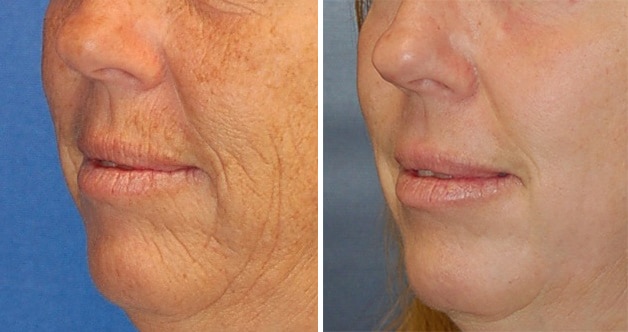
Erbium laser resurfacing is a highly effective way to dramatically reduce facial wrinkles, but it does have some significant downtime. Many patients look at erbium laser resurfacing before and after photos to understand what results to expect, but it does have some significant downtime. As such, some background on this skin resurfacing laser treatment is helpful to understand who it’s for and why.
Why Do People Consider Erbium Laser Resurfacing for Wrinkles?
People often turn to erbium laser resurfacing when other treatments haven’t fully worked on their wrinkles. Facial wrinkles are an inevitable side effect of aging, and many treatments are available to reduce wrinkles, including botox, dermal fillers, and surgery. For certain types of facial wrinkles, these treatments fall short of achieving a significant and lasting improvement. Examples of such wrinkles would include vertical “smoker’s lines” of the upper and lower lips, criss-cross lines of the cheeks, crepey skin of the eyelids, and cobblestone skin texture around the mouth. While some of these types of wrinkles may be improved to some degree by dermal fillers, many people have wrinkles that are too widespread or that don’t respond well to injectable treatments. In these patients, laser resurfacing may present an excellent option.
Why Is It Called Resurfacing?
Resurfacing is actually what the body does after the treatment. The laser removes the outer layers of the skin very precisely, and then the patient’s skin does the real work of resurfacing or healing over the dermis. The laser doesn’t actually burn the skin, but rather ablates or vaporizes the outer layer with a very rapid laser pulse. Wrinkles, texture irregularities, and discoloration are removed along with these outer layers. The patient’s own epidermal cells then emerge from the glands and hair follicles and cover over or “resurface” the deeper skin layers. This produces a dramatic and lasting rejuvenation of the skin.
What to Expect After Erbium Laser Resurfacing
Recovery follows a fairly predictable pattern. During the first week after treatment, the skin is healing, and this requires regular skin care and being out of sight. Not unlike the COVID-19 lockdown, but with frequent facial washing and reapplication of skin balm. After that first week, the skin has healed, but remains pink for several additional weeks. Given the downtime, many alternatives have been developed, including chemical peels, “fractional” lasers, intense pulse light and radiofrequency micro-needling. While these treatments may help improve skin discoloration, skin tone and texture, they usually fall short when it comes to significant wrinkle reduction. This is where erbium laser resurfacing excels. Over the last 20 years, we have found that patients who are good candidates and are properly prepared for the downtime do exceptionally well and are thrilled with the short- and long-lasting results.
Interested in Erbium Laser Resurfacing?
Erbium Laser Resurfacing Before and After: Your Questions Answered
What Do Erbium Laser Resurfacing Before and After Results Look Like?
Erbium laser resurfacing before and after results usually follow a predictable pattern over several weeks. Immediately after treatment, skin appears red and swollen, similar to a sunburn, which is the most dramatic part of the before and after difference. Within the first week, the treated skin peels and flakes as fresh, smoother skin emerges underneath. By the end of week one, most patients can return to normal activities, though the skin often remains pink for several additional weeks while it continues to heal. Full results, including reduced wrinkles, improved texture, and a more even skin tone, are typically visible within four to six weeks and continue to improve as collagen rebuilds over the following months. You can view real erbium laser resurfacing before and after photos from our practice to see the kind of transformation patients experience.
How Does Erbium Laser Resurfacing Compare to CO2 Laser Resurfacing?
Erbium laser resurfacing and CO2 laser resurfacing both remove damaged outer layers of skin to reveal smoother skin underneath, but they work at different depths and speeds. Erbium lasers are generally gentler, causing less heat damage to surrounding tissue, which typically means less swelling and a shorter recovery window than CO2 treatments. CO2 lasers tend to penetrate deeper, making them a common choice for more severe wrinkles or scarring, but this comes with longer downtime and a higher risk of prolonged redness. Erbium laser resurfacing is often preferred by patients who want significant wrinkle reduction without the extended recovery associated with CO2 treatment. The right choice depends on your specific skin concerns, downtime tolerance, and goals, which is why a consultation with our team is the best way to determine which laser resurfacing option fits your needs.
What Are the Most Common Erbium Laser Resurfacing Side Effects?
The most common erbium laser resurfacing side effects are redness, swelling, and skin sensitivity during the first week after treatment, followed by pink or flushed skin that can last for several additional weeks. Some patients also experience mild itching or tightness as the skin heals and new cells resurface. These effects are a normal part of the healing process rather than a complication, since the treatment works by removing the outer layers of skin so fresh skin can regenerate underneath. Serious side effects are uncommon when the procedure is performed by an experienced provider on a well-prepared candidate, though proper aftercare, including gentle cleansing, moisturizing, and staying out of direct sun, plays a significant role in how smoothly the skin heals. Discussing your skin type and medical history during a consultation helps your provider set realistic expectations for your recovery.
Is Erbium Laser Resurfacing the Right Skin Resurfacing Laser Treatment for Me?
Erbium laser resurfacing is often the right skin resurfacing laser treatment for people with fine lines, sun damage, or textured skin who want noticeable results without the longest possible recovery time. It works especially well for wrinkles that have not responded fully to Botox or dermal fillers, such as lines around the mouth or crepey skin around the eyes. Good candidates are healthy, prepared for one to two weeks of visible healing, and realistic about needing to stay out of the sun during recovery. It may not be the best fit for patients seeking zero downtime or those with very deep wrinkles who may benefit more from a deeper resurfacing method. The best way to know whether this treatment matches your skin and goals is to book a consultation with our team, where we can review your skin and show you real erbium laser resurfacing before and after examples so you know what results to expect.